What Is an Annuity? Understanding the Basics
Learn about annuities, how they compare to CDs, and why some people use them for tax deferred growth & future income.
ANNUITIES


Many people approaching retirement ask similar questions:
Will my savings last?
Can I create dependable income?
Is there a better place for cash than a Certificate of Deposit (CD) or savings account?
How much risk should I take with money I'll need later?
One financial tool designed to help address some of those concerns is an annuity. Annuities are often misunderstood. Some people view them as complicated insurance products. Others see them as a way to create retirement income or protect savings from market volatility. The truth is much simpler.
An annuity is a contract issued by a life insurance company that can help you grow money for retirement, create future income, or both.
Like any financial tool, an annuity can be helpful in some situations and unnecessary in others. Understanding the basics can help you decide whether an annuity deserves consideration as part of your financial plan.
Why Do People Buy Annuities?
Most people purchase annuities for one or more of the following reasons.
They Want Their Money to Grow- Some annuities pay a fixed interest rate, while others offer growth opportunities linked to market indexes.
They Want Principal Protection- Many retirees become more concerned about preserving money than chasing the highest possible return. Certain annuities are designed to help protect principal while still providing growth opportunities.
They Want Future Income- Unlike CDs, annuities can offer options that convert a portion of savings into income that may last for life.
People generally do not buy annuities because they are exciting. They buy them to help solve a problem—whether that's generating income, protecting principal, or growing money in a tax-efficient way.
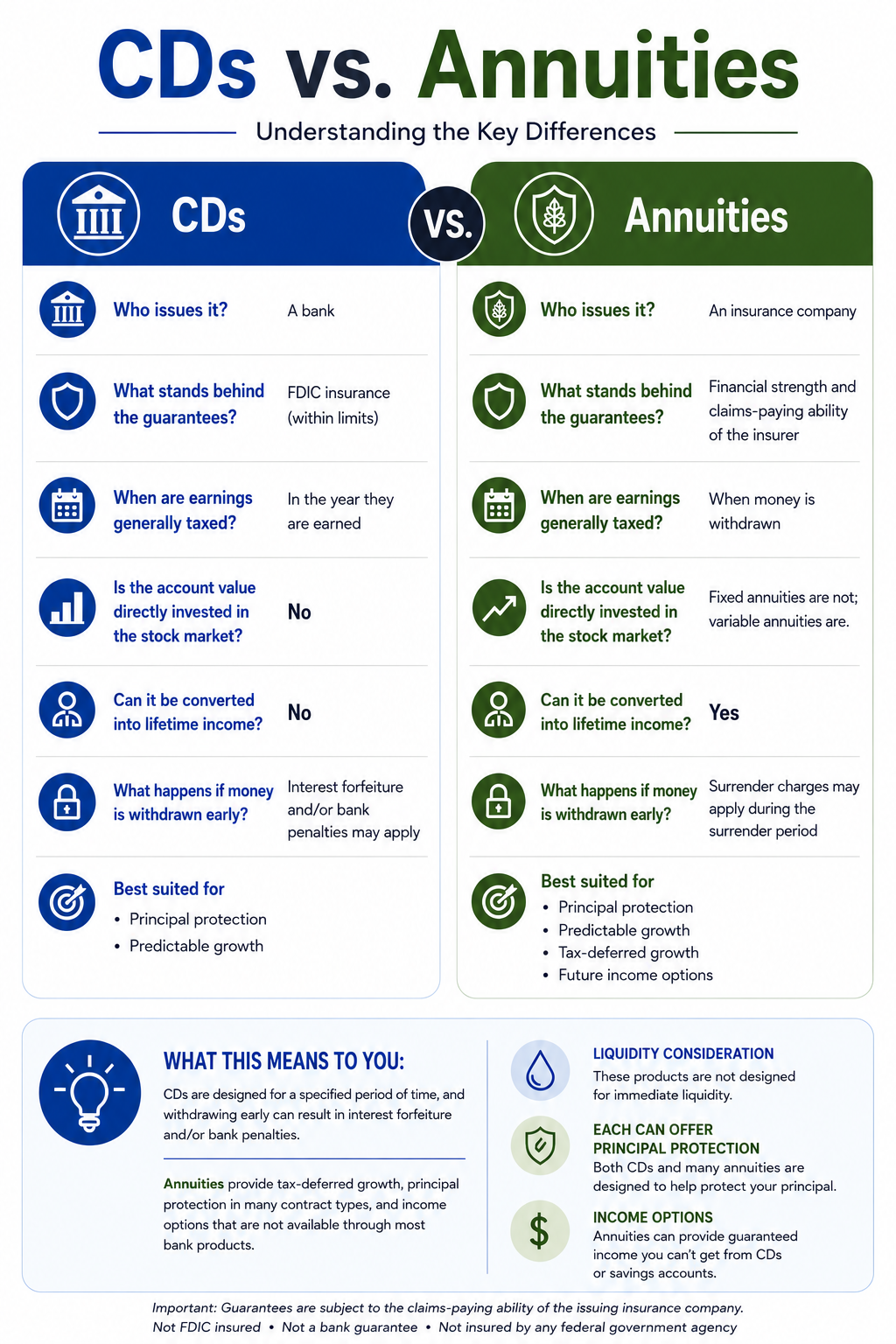
How Is an Annuity Different from a Certificate of Deposit (CD)?
Many consumers compare annuities to CDs because both are often used by people seeking principal protection and predictable growth.
While there are similarities, there are also important differences.
Takeaways
A CD may appeal to people seeking principal protection and predictable growth.
An annuity may offer additional features such as predictable and tax-deferred growth and options for converting a portion of savings into lifetime income.
Neither is automatically better. The right choice depends on your goals, timeline, and need for access to your money.
Understanding Tax-Deferred Growth
One aspect that attracts many people to annuities is tax-deferred growth. That phrase sounds complicated, but the concept is simple. Tax-deferred does not mean tax-free. It simply means taxes are delayed until money is withdrawn. With many bank products such as CDs or savings accounts and other taxable investments, earnings typically create taxable income each year. You may be familiar with this and have received one of those 1099 tax forms for earnings.
Annuities earnings are NOT taxed while they remain in the contract. Taxes are generally deferred until withdrawals begin. For some, allowing earnings to compound for years and control when the taxes occur stands out as a valuable feature.
Why Should I Care?
This benefit is straightforward: Money can remain in the account and continue compounding before taxes are due and may provide a more favorable income and tax strategy when compared to an account where earnings are taxed annually.
Can You Lose Money in an Annuity?
The answer depends on the type of annuity.
Fixed annuities are designed so stock market declines do not reduce the contract value.
Variable annuities allow direct market participation and can increase or decrease in value based on investment performance.
The Truth
Not all annuities work the same way.
Before purchasing an annuity get a clear understanding and documentation of the type of annuity you are considering, its features, and what level risk may be involved.
What Happens If I Die While Owning an Annuity?
One of the most common questions about annuities is:
"What happens to my money if I die?"
The answer depends on how the annuity is being used at the time of death.
If the annuity is still accumulating value, most contracts allow you to name beneficiaries who may receive the remaining account value or other death benefits provided by the contract.
However, some annuities are later converted into a stream of income. This is called Annuitization and depending on the income option selected, payments may continue to a beneficiary or stop at death. In many cases, the option that provides the highest income is not the same option that provides the greatest benefit to beneficiaries.
What This Means to You
Annuities can provide valuable income and beneficiary planning opportunities, but the outcome at death depends on the contract and payout option selected.
Understanding what happens to both the account value and any income payments is an important part of evaluating an annuity.
Potential Advantages of Annuities
Depending on the contract selected, annuities may offer:
Tax-deferred growth
Predictable growth opportunities
Lifetime income options
Protection from market losses
Beneficiary planning opportunities
Reduced portfolio volatility
Potential Drawbacks of Annuities
Annuities may also involve:
Surrender charge periods
Withdrawal limitations
Optional rider costs
Tax penalties before age 59½ in some situations
Contract complexity
What This Means to You
Every financial product involves tradeoffs.
Understanding both the advantages and limitations is important before making a decision.
Bottom Line
Annuities are not designed to replace every other financial product. Instead, they are tools that may help address specific concerns such as generating retirement income, protecting principal, or providing tax-deferred growth. The most important question is not whether annuities are good or bad. The most important question is whether a particular annuity helps solve a problem you're trying to address within your overall financial plan.
Additional Reading
NAIC Insurance Topics: Annuities — Overview of annuity types, income options, and how annuities work.
NAIC Consumer's Guide to Annuities — Educational guide covering deferred annuities, purchasing considerations, and questions consumers should ask before buying.
Have Questions?
Educational and Tax Disclaimer
This article is provided for general educational purposes only and should not be considered tax, legal, investment, accounting, or insurance advice.
Tax laws, regulations, and individual circumstances vary. The tax treatment of annuities, life insurance, retirement accounts, and related financial products depends on a variety of factors, including contract provisions, ownership structure, beneficiary designations, and applicable federal and state laws.
Coverage Catalysts and its contributors do not provide tax or legal advice through this website. Readers should consult their own qualified tax, legal, accounting, and financial professionals regarding their specific situation before making financial decisions.
Product features, guarantees, fees, availability, and underwriting requirements vary by insurer and state. Guarantees are subject to the claims-paying ability of the issuing insurance company.